

In recent years, the financial and economic landscape of Pakistan has become one of the most talked-about topics among students, professionals, and policymakers. From inflation and currency depreciation to digital banking and international investments, the country stands at a critical turning point. But within these challenges lie powerful opportunities that can reshape Pakistan’s economic future.
💰 The Current Economic Reality
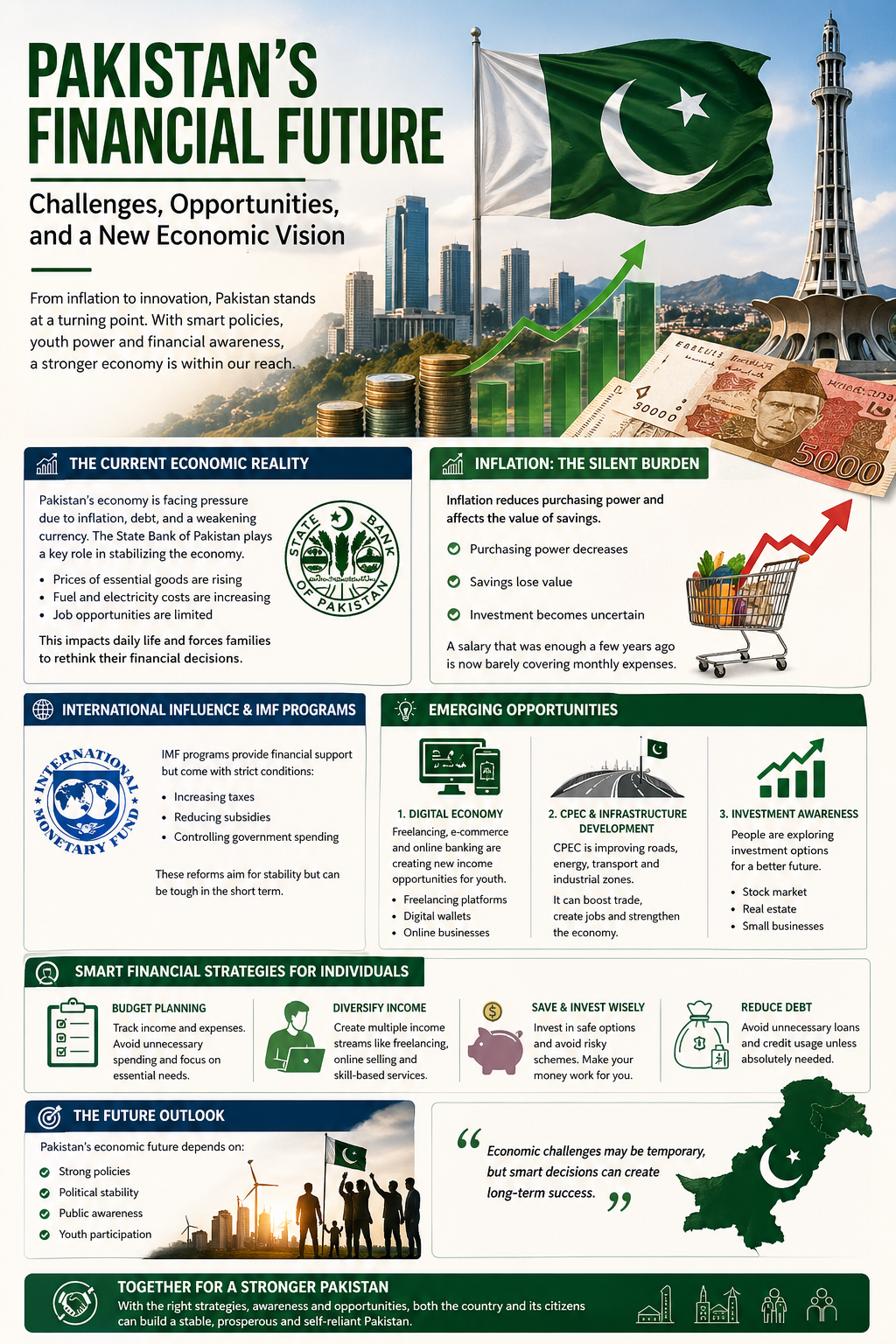
Pakistan’s economy has been facing significant pressure due to rising inflation, increasing debt, and a weakening currency. The role of the State Bank of Pakistan has been crucial in managing monetary policy, controlling inflation, and stabilizing the banking sector.
However, common people feel the impact daily:
- Prices of essential goods are rising
- Fuel and electricity costs are increasing
- Job opportunities are limited
This situation has forced individuals, especially salaried persons, to rethink their financial planning and spending habits.
📊 Inflation: The Silent Burden
Inflation in Pakistan is not just a number—it directly affects the lifestyle of citizens. When inflation rises:
- Purchasing power decreases
- Savings lose value
- Investment becomes uncertain
For example, a salary that was enough a few years ago is now barely covering monthly expenses. This creates financial stress and forces families to prioritize needs over wants.
🌍 International Influence and IMF Programs
Pakistan’s economy is also influenced by global financial institutions like the International Monetary Fund. IMF programs often provide financial support but come with strict conditions such as:
- Increasing taxes
- Reducing subsidies
- Controlling government spending
While these reforms aim to stabilize the economy, they can be difficult for the general public in the short term.
🚀 Emerging Opportunities in the Economy
Despite the challenges, Pakistan has strong potential for growth. Key areas of opportunity include:
1. Digital Economy
The rise of freelancing, e-commerce, and online banking is transforming the financial system. Platforms like:
- Freelancing marketplaces
- Digital wallets
- Online businesses
are empowering youth to earn independently.
2. CPEC and Infrastructure Development
The China-Pakistan Economic Corridor is one of the most significant economic initiatives. It aims to improve:
- Roads and transport
- Energy supply
- Industrial zones
If managed properly, CPEC can boost trade, create jobs, and strengthen Pakistan’s economy.
3. Investment Awareness
People are becoming more aware of investment options such as:
- Stock market
- Real estate
- Small businesses
Financial literacy is increasing, which is a positive sign for long-term economic stability.
🧠 Smart Financial Strategies for Individuals
In the current economic situation, managing personal finance is very important. Here are some practical tips:
✔ Budget Planning
Track your income and expenses carefully. Avoid unnecessary spending and focus on essential needs.
✔ Diversify Income
Try to develop side income sources such as:
- Freelancing
- Online selling
- Skill-based services
✔ Save and Invest Wisely
Instead of keeping money idle:
- Invest in safe options
- Avoid risky schemes
✔ Reduce Debt
Avoid unnecessary loans and credit usage unless absolutely needed.
🔮 The Future Outlook
Pakistan’s economic future depends on:
- Strong policies
- Political stability
- Public awareness
- Youth participation
If the government focuses on sustainable development and the public adopts smart financial habits, Pakistan can move towards economic stability and growth.
malikashir864@gmail.com
very Informative blog , I really appreciated 🙂👍
Muhammad Taha Munir
A very insightful article that explains Pakistan’s economic challenges and future opportunities in a clear and balanced way. The discussion on inflation, digital economy, and smart financial strategies makes this blog highly informative and relevant for today’s generation. 📊🇵🇰