
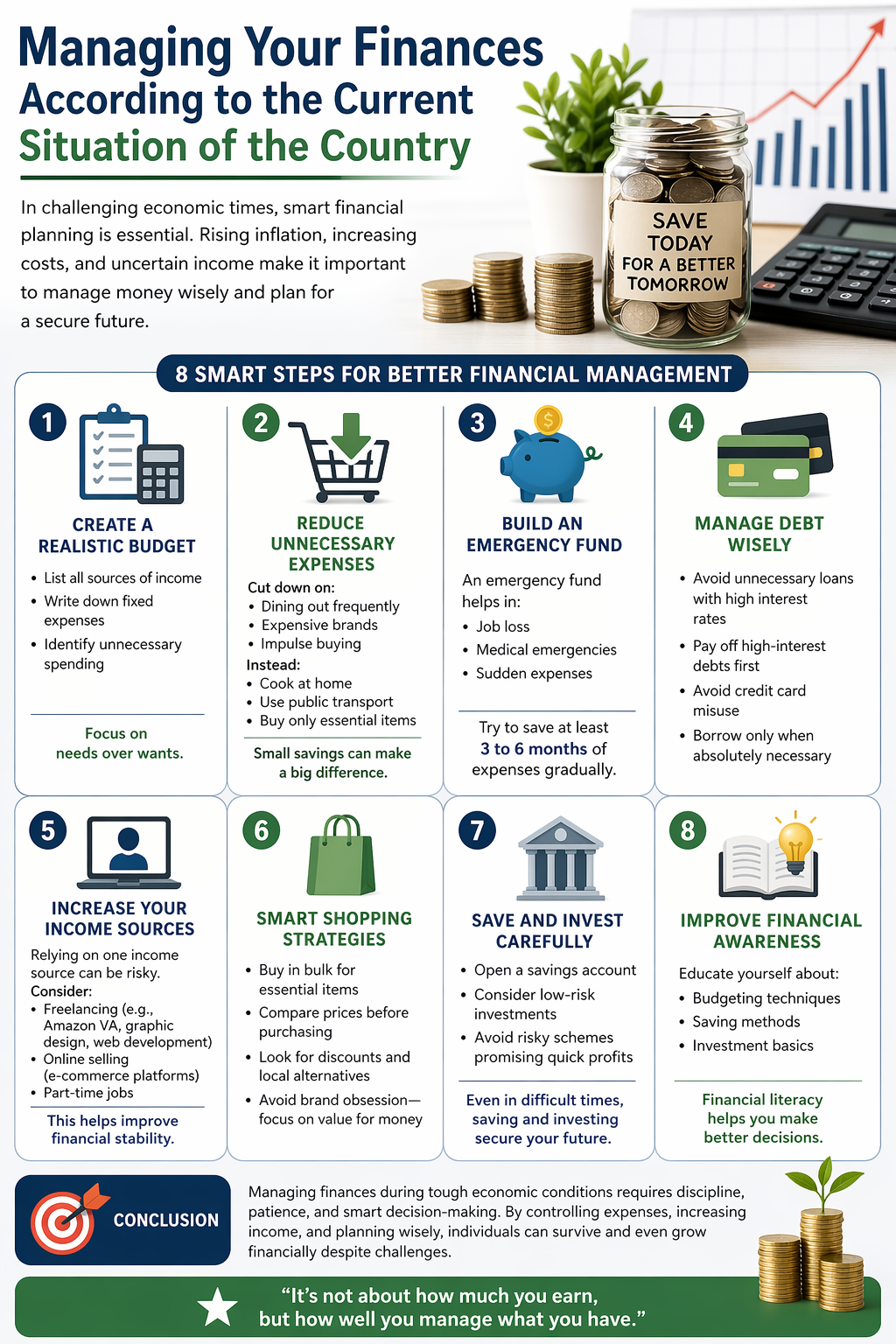

In today’s challenging economic environment, especially in countries like Pakistan, managing personal finances has become more important than ever. Rising inflation, increasing utility bills, and uncertain job markets are affecting individuals and families alike. In such conditions, smart financial planning is not just helpful—it is essential.
📊 Understanding the Current Economic Situation
The economy is facing several challenges such as:
- High inflation (prices of food, fuel, and daily items increasing)
- Currency depreciation
- Limited job opportunities
- Rising interest rates
These factors reduce purchasing power and make it difficult to maintain a stable lifestyle. Therefore, individuals must adjust their financial habits accordingly.
📝 1. Create a Realistic Budget
The first step is to track your income and expenses.
- List all sources of income
- Write down fixed expenses (rent, bills, fees)
- Identify unnecessary spending
👉 Focus on needs over wants. Avoid luxury spending during tough times.
💡 2. Reduce Unnecessary Expenses
Cut down on:
- Dining out frequently
- Expensive brands
- Impulse buying
Instead:
- Cook at home
- Use public transport
- Buy only essential items
Small savings can make a big difference over time.
💰 3. Build an Emergency Fund
An emergency fund helps in unexpected situations like:
- Job loss
- Medical emergencies
- Sudden expenses
Try to save at least 3 to 6 months of expenses gradually.
📉 4. Manage Debt Wisely
Avoid taking unnecessary loans, especially with high interest rates.
- Pay off high-interest debts first
- Avoid credit card misuse
- Borrow only when absolutely necessary
📈 5. Increase Your Income Sources
In difficult economic conditions, relying on one income source can be risky.
Consider:
- Freelancing (e.g., Amazon VA, graphic design, web development)
- Online selling (e-commerce platforms)
- Part-time jobs
This helps improve financial stability.
🛒 6. Smart Shopping Strategies
- Buy in bulk for essential items
- Compare prices before purchasing
- Look for discounts and local alternatives
Avoid brand obsession—focus on value for money.
🏦 7. Save and Invest Carefully
Even in difficult times, saving is important.
- Open a savings account
- Consider low-risk investments
- Avoid risky schemes promising quick profits
🧠 8. Improve Financial Awareness
Educate yourself about:
- Budgeting techniques
- Saving methods
- Investment basics
Financial literacy helps you make better decisions.
Muhammad Taha Munir
A very practical and informative article that highlights the importance of smart financial planning during challenging economic conditions. The budgeting, saving, and income diversification tips are realistic and highly useful for individuals and families trying to maintain financial stability. 💰📈